What normal battery life looks like
Before assuming something is wrong, it helps to know what is ordinary. A key fob usually uses a small lithium coin cell, commonly a type such as the CR2032 or CR2025, though the exact model varies and is printed on the cell. In normal use the fob spends nearly all its time asleep, drawing a tiny current, and wakes only when a button is pressed or, on keyless entry systems, when a signal from the vehicle asks for a reply.
With normal use, a good cell can last a long time, often a year or more, and sometimes several. There is no single figure that applies to every vehicle, because the number of presses, the transmit power and the electronics differ. What matters is your own pattern. If you used to get a long stretch from a battery and now get far less, something has changed. If a fresh battery gives out within weeks, there is almost certainly a cause to find.
Keyless entry and push-button systems tend to use more battery than a simple remote, because the fob listens and replies each time you approach or touch the door handle. If you park close to the house and the fob sits near the vehicle all night, it may be woken repeatedly by the car and spend its battery on answers. That is a common and often overlooked drain.
Think back to when the problem began. Did you change vehicles, add an aftermarket accessory, move house, start keeping the fob in a different place or change the brand of battery? Those details often point straight to the cause. The sections below walk through the usual culprits.
Buttons pressed in pockets and bags
The most common cause of a flat battery is also the simplest. The fob is being pressed when you do not know it. In a trouser pocket, a handbag, a gym bag or a drawer full of objects, a button can be held down by pressure from other items. Each press sends a signal and uses power. If a button is held down, the fob may transmit continuously until the battery is empty.
You can test for this. Take the fob and, in a quiet place, look at it from all sides. Do any buttons sit slightly proud or stay depressed? Is the rubber pad warped? Does the fob have a hard shell and a soft button cover that can get stuck? Try dropping it in a bag with your usual items, shaking the bag lightly, then checking whether a light on the fob flashes.
Practical changes help. Carry the fob in a pocket by itself rather than with keys and coins. Use a fob cover with raised edges that protect the buttons. Use the lock function of the buttons, where available, to avoid accidental presses. Remove the fob from a tight pocket before you sit down.
For fobs kept at home, store them away from items that can press them. A bowl of keys with a heavy ring on top can press a button repeatedly. A hook by the door avoids this.
Pressing out of range also causes desynchronization on some systems, which can lead to a fob that looks dead even with a good battery. If a fob has been pressed many times away from the vehicle, you may need to resync it. See our page on a fob that stopped working for that process.
Low quality or old stock cells
Not all coin cells are equal. A cell from a well known maker with a recent date can outlast one from an unknown source by a wide margin. Unbranded cells from bulk multipacks or bargain bins may have lower capacity, higher self discharge and a shorter shelf life. Because the fob is a low drain device, a cell can seem fine for a few weeks and then drop suddenly.
Age matters too. A cell that sat on a shelf for years before you bought it has already lost some of its charge. Check the date on the packaging when you buy. Buy from a shop that sells many cells, where stock turns over, rather than a dusty rack.
Match the type exactly. A CR2025 is thinner than a CR2032, and although it may fit physically, it holds less charge. If the original is a 2032, use a 2032. Mixing types can also cause poor contact, which makes the fob work intermittently and look like a dying battery when it is not.
Take care to fit the battery with the correct side up, and make sure the contacts are clean and hold it firmly. A loose battery or bent contact causes intermittent power, and a fob that cuts out when jolted.
Some owners swap batteries and then keep the old one around, only to mix it up later. Mark or discard old cells. If you have changed the battery several times and it still dies quickly, test with a cell from a reliable source, and if that does not help, look at the other causes on this page.
Heat in Texas cars
Houston summers are hard on small batteries. A parked car in direct sun can reach interior temperatures far above what electronics are designed for, and a fob left on the dash, in a cup holder or in a console in that heat is in a harsh environment. High temperatures accelerate the chemical reactions inside a cell, which makes it lose charge faster, and repeated heat cycles shorten its life.
If you notice that battery failures cluster in the hot months, heat is a likely contributor. The fix is easy. Carry the fob with you rather than leaving it in the car. If you must leave it, do not put it on the dash or the seat in direct sun. Use shaded storage like a glovebox, though even that is hot in summer.
Heat also affects the plastic case. Cases can warp slightly, which changes the pressure on the battery and contacts. Over time this can cause intermittent connections. A fob that has been through several summers in a hot car may show a loose fit when you open it.
Humidity adds to the problem. Moist air and heat together accelerate corrosion on contacts, which raises resistance and reduces the voltage the electronics see. Our guide on summer heat and car keys and the one on humidity and key care give practical care tips for our climate.
None of this is dramatic. It is simply a reminder that a fob is a small electronic device and treats heat the way a phone does: badly.
Corrosion and leaks inside the case
If you open a fob and see white or green crust around the battery or on the board, moisture or a leaking cell has been at work. Corrosion creates resistance between the battery and the contacts, which means the fob may not receive enough voltage even when the battery is good. It can also create a small leakage path that drains a cell steadily.
Sweat, rain, a splash from a drink and the humid air we have in this region are all enough to start this over time. A fob that lives in a pocket against skin picks up moisture. A fob that is used near the coast picks up salt. Once corrosion begins, it spreads.
Cleaning can help if caught early. A technician uses a suitable solvent and a soft brush to clean the contacts and the board, then inspects for damage to traces. At home, you can wipe the battery contacts gently with a dry cotton swab, but avoid harsh abrasives and do not soak the board in water. If the board shows heavy corrosion or lifted traces, the fob needs professional attention or replacement.
A leaking battery is a different matter. The leaking material is corrosive and can damage the board quickly. If you find a leaked cell, remove it, wear gloves if the material is visible, and avoid touching your eyes. Dispose of the cell properly.
Replacing the battery regularly before it fails, rather than waiting until it dies and leaks, reduces this risk. If your fob has a seal or gasket in the case, make sure it sits properly when you close it. If your fob has been through water, read our page on key fob water damage.
When the circuit board is the problem
If you have eliminated pockets, poor cells, heat and corrosion, the next suspect is the electronics. A failing component on the board can draw more current than it should, even when the fob is idle. This is called parasitic drain, and it can empty a coin cell in days or weeks.
There are signs. A fob that feels warm after sitting idle is a worrying one. A fob whose indicator light stays on or flickers without a button press suggests a fault. A battery that is empty each time you check, despite a fresh cell and careful handling, suggests a drain.
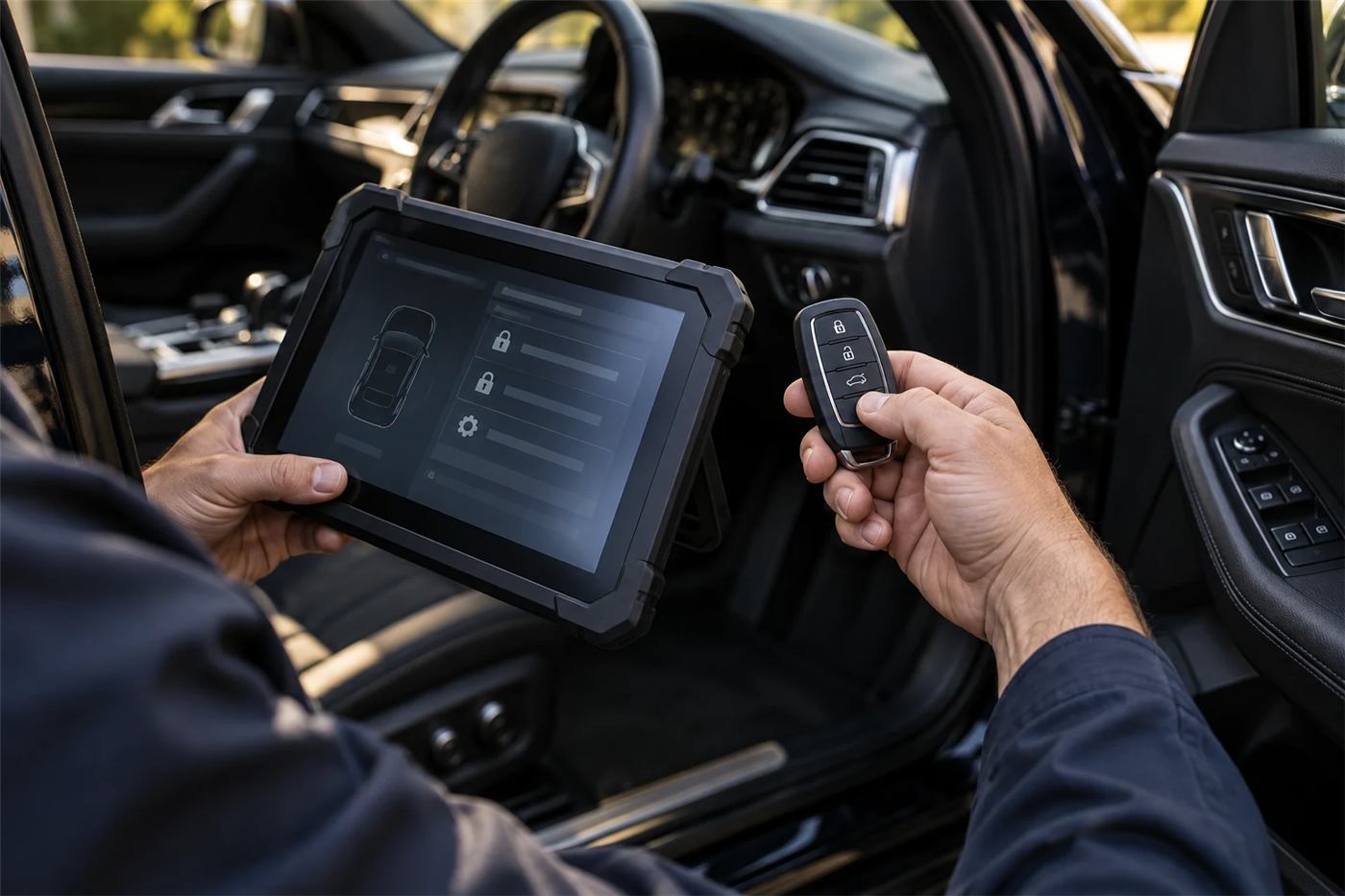
A technician can measure the current the fob draws using a meter or a test tool, and can read the fob's state with a diagnostic device. If the idle draw is high, the board or a component is faulty. Options include repairing the board, replacing the fob electronics, or supplying a new fob and programming it to your vehicle.
Falls and impacts can crack solder joints or damage components, creating shorts. A fob that was fine until it was dropped on concrete and then began to eat batteries tells its own story.
Another possibility is that the vehicle is waking the fob too often. Some systems keep polling when the fob is inside the range, which drains it. This is a design behavior rather than a fault, but it can be reduced by keeping the fob farther from the vehicle when parked, such as in a drawer away from the garage wall. Some vehicles also allow a setting that reduces polling, which your manual or a technician can describe.
A step by step way to find the cause
This process separates the habit causes from the hardware causes. Habits take no tools to change and make a big difference. Hardware causes need a technician. By keeping notes, you will give the technician a head start. For the replacement process itself, see key fob battery replacement.
- Write down when you changed the battery and when it died, so you know the real lifespan.
- Inspect the fob for buttons that stay depressed, a warped pad or a case that squeezes a button.
- Open the fob carefully and check for crust, moisture or a leaked cell. Look at the contacts for bends.
- Fit a new cell of the exact type from a reliable source, and note the date.
- Change your habits for two weeks: keep the fob alone in a pocket, away from heat, and not in a bag.
- If the fob still dies quickly, test it away from the vehicle for a week to see whether the car is waking it.
- If the cell still empties fast, take the fob to be tested for drain.
Smart keys, push-button systems and polling
Keyless entry fobs, often called smart keys, are more demanding than traditional remotes. They wait for a low power signal from the vehicle when you pull a door handle or press the start button, then respond with an encrypted reply. They also respond to pings the vehicle sends when it is checking whether a key is inside. Each response uses a bit of battery.
If the fob is stored near the vehicle, for example on a hook just inside the garage door, it may answer pings through the night. A fob in a pocket that you carry all day will answer far more often, though that is normal use. If you find the battery runs down in a few months, consider the location where it sits when you are at home.
Some owners use a signal blocking pouch to guard against relay attacks, and that also reduces drain by silencing the fob. Others place the fob in a metal tin. Be sure the method works with your system and that you remember to take the fob out when needed. Our guide on relay attack protection explains the security side.
If your vehicle shows a low key battery message, act on it soon. Many systems warn before failing and offer a backup start method. See our page on push-button start keys for how these systems differ from standard keys.
Understanding that a smart key is always listening helps you set realistic expectations. A battery life shorter than a simple remote is normal, but a battery that fails within weeks is a sign of a deeper issue.
When to call and what to bring
If you have replaced the battery more than once in a short span and the cause is not obvious, it is time to have the fob tested. A technician with a fob tester can read the battery voltage, check the transmit signal and measure idle drain in a short visit, and can tell you whether the board is sound.
Bring or have ready the fob, any spare fobs, the vehicle make, model and year, and the vehicle identification number. Describe the history: how often the battery has been replaced, which type you used, where you keep the fob and whether it has been dropped or wet. Have identification and proof of ownership available in case a replacement fob is needed.
Quotes are given by phone. If the job can be priced from your description, you will hear it before anyone is dispatched. If it needs an on-site look, a visit is arranged and the service call charge is explained on the phone before dispatch. Many fob problems can be handled at the vehicle without a shop trip.
If a replacement is the answer, the technician will cut and program a new fob to the vehicle, or move the electronics into a fresh case if the board is sound. See key fob programming for the process.
If you are tired of changing batteries, call and describe the pattern. A short conversation can often point to the cause before anyone leaves the shop.
Questions people ask
How long should a key fob battery last?
There is no single figure, because it depends on the vehicle, the number of presses and whether the fob is a simple remote or a keyless smart key that answers the car often. Many last a year or more. If yours dies in weeks, something is draining it, and it is worth finding the cause.
Can my fob drain while sitting still?
Yes, in a few ways. Buttons pressed by objects in a bag or drawer can transmit repeatedly. On keyless systems, the vehicle can wake the fob when it is nearby. A faulty circuit board can also draw current when idle. Storing the fob alone, away from the car, helps rule out the first two.
Does heat really shorten fob battery life?
Heat speeds up chemical reactions inside a coin cell, which shortens life and increases self discharge. In Houston summers a fob left on a dash or console can get very hot. Carrying the fob with you or storing it in shade reduces the effect. Humidity also adds corrosion risk.
Does the brand of battery matter?
It can. Cells from reputable makers with a recent date often last longer than unbranded ones or old stock. Always match the exact type printed on the old cell, since a thinner cell holds less charge and may make poor contact. Buy where stock turns over quickly.
How can I tell if the board is faulty?
Signs include a fresh battery that is flat within days, a fob that feels warm when idle, a light that flickers without a press, or trouble that began after a drop. A technician can measure the idle current and test the transmit signal to confirm. Then repair or replacement can be discussed.
Will a new fob drain the same way?
If the cause was habit, heat or a damaged board, a new fob should behave normally when handled sensibly. If the cause was the vehicle waking the fob very often, the new fob will respond the same way, though a different storage spot can help. A technician can advise which applies.
Describe the situation by phone and we will tell you what the job involves. Quotes are given by phone. Jobs that cannot be quoted without seeing them need a technician on site, and the service call charge is explained on the phone before anyone is dispatched.
(713) 574-7660Related pages
Written by Claude (AI) (AI) for Houston Car Key Locksmith.