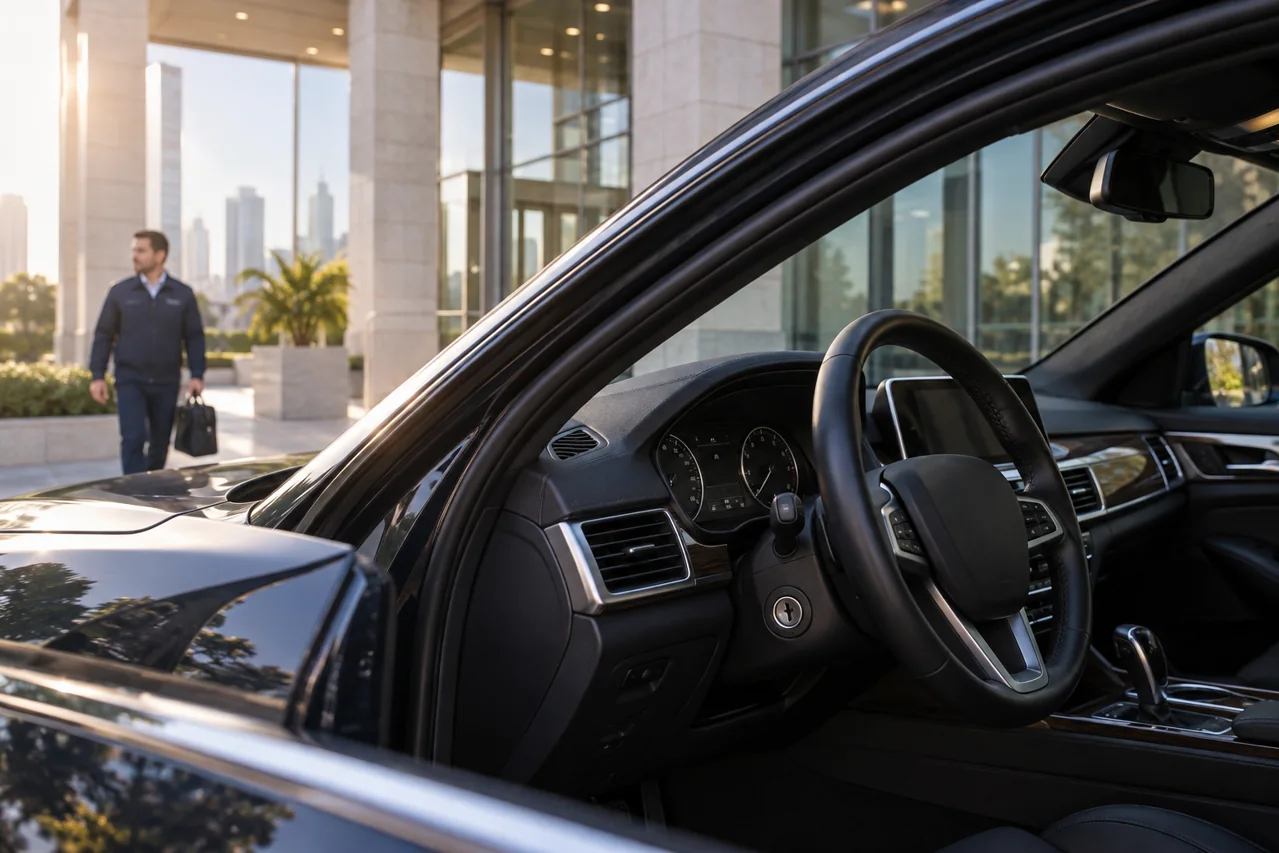
A broad lineup means a broad range of keys
Nissan is one of the most common brands on Houston roads, and the lineup is broad. Sentras and Versas serve as commuter cars and first vehicles. Altimas fill the middle of the sedan market. Rogues and Pathfinders carry families. Frontiers and Titans work on job sites and ranches. Each of these categories reaches its owners through a different key story, and the key that comes with each vehicle depends on the year and trim.
A short list of key families covers most of what a technician sees. There are transponder keys with a cut blade and a chip, remote head keys that combine buttons and blade, and Intelligent Keys, the brand's name for proximity fobs that allow push-button start. Older vehicles lean toward the first two, and newer ones toward the third, but trims within the same model year can differ.
That is why the first questions on a call are the model, the approximate year and whether the vehicle has a start button or a keyed ignition. Those two details narrow the key family almost immediately, and the rest is a matter of matching the right blank, fob and tools.
The Intelligent Key explained
The Intelligent Key is Nissan's proximity key. The vehicle detects the fob when it is close, lets you unlock doors by touching a handle or pressing a button and allows the engine to start when you press the start button with the brake pedal pressed. The fob can stay in a pocket or purse for the entire drive.
Inside the fob is a board, a coin battery and an antenna. Outside is a plastic case with buttons and a small release for the emergency blade. The blade is a metal key hidden inside the fob and is meant only for opening a door when the fob battery is dead or the vehicle does not respond. It does not normally start the vehicle.
Failures follow predictable paths. A weak battery shortens the range and causes warning messages. A cracked case allows moisture in. A dropped fob can loosen the board. Water exposure is especially harmful. A technician tests the fob and the vehicle to separate these causes, and our page on smart key replacement explains how a replacement fob is paired.
Altima and Maxima: the commuter sedan case
Altimas are among the most common sedans in the Houston area, driven by commuters on the Katy corridor, the Gulf corridor and the Beltway. Keys on this model vary widely depending on year. Some use a transponder key with a separate remote, some use a remote head key and many later builds use an Intelligent Key with push-button start.
Sedan owners tend to have simple but frustrating problems. The key blade wears, and the ignition cylinder starts to stick. A fob loses its buttons after years of pocket use. A key falls into a drain on a rainy day. For most of these cases, a mobile visit resolves the problem in the lot where the car sits.
If your Altima key turns with resistance or sticks in the ignition, mention that on the call. A worn key and a worn ignition cylinder can wear each other, and replacing the key alone will not fix a cylinder that has failed. Our page on ignition repair covers what a technician looks for.
Sentra and Versa: first cars and shared vehicles
Smaller Nissan cars are often the first vehicle a young driver owns or the second car in a household. They also tend to be shared among several people, which means keys travel. A Sentra key may live in a backpack, a gym bag or the pocket of a work uniform. Those are places where keys are lost, broken or left behind.
Many of these cars use a simpler key, either a transponder blade or a remote head key. That simplicity helps, since parts are typically easy to source and programming is straightforward for a trained technician. The main challenge is that owners often have only one key, which turns a simple loss into an all keys lost situation.
If you are buying one of these cars used, make sure you receive two working keys. A seller who hands over a single key may be unaware of how much more involved it is to create the second one later. Our used car buyer key checklist gives a list of things to confirm before you pay.
Rogue, Pathfinder and Murano: family crossovers
Crossovers and SUVs from Nissan usually carry Intelligent Keys on most trims, and families often hold two or three fobs. The problems are the usual ones: one fob goes missing at a park, another stops working after a wash cycle, the third is at a grandparent's house.
These vehicles often have power liftgates, and the liftgate button on the fob is a handy test of whether a replacement is the correct fob family. A new fob that locks the doors but cannot command the liftgate may be the wrong type, and it is easier to catch that during the visit than days later when you load groceries.
Because family vehicles are used constantly, the best time to replace a failing fob is before it fails entirely. A technician can often make a spare from a working fob much more simply than creating a key when none work. Our page on spare key duplication explains the difference.
Frontier and Titan: work truck realities
Nissan's trucks serve the same duties as other trucks in the Houston area: job sites, ranch work, towing and daily commuting. Keys on these trucks may be plain transponder keys on base models and smart keys on higher trims. Work trucks lose keys in the dirt, in toolboxes and on tailgates.
When a work truck loses its only key, the cost of downtime can matter more than the cost of the key. A mobile technician arrives at the truck, verifies ownership, cuts and programs a new key and tests it. For company-owned trucks, bring a work order or letter in addition to identification.
Truck owners should also think about the bed lock, toolbox lock or camper shell lock, which may have separate keys. A technician can often cut those keys while on site if you mention them in advance. Our page on truck and box truck keys covers related situations.
Transponder keys and programming
Older and simpler Nissans use a transponder key. The blade is cut to turn the ignition, and a chip in the head tells the vehicle that the key is genuine. If the chip is wrong or missing, the engine will crank and stop or will not crank, and a key-shaped light may blink on the dash.
Programming a transponder key requires matching the chip type to the vehicle and using diagnostic equipment to register the new key. In some cases, a security authorization step is needed, and a qualified technician completes it after confirming ownership. This is not a routine home project, and attempts to bypass it can trigger a lockout period that delays the repair.
If you want to understand the whole process, our guide to how key programming works explains it in plain language. The short version is that cutting the blade is the easy part and the electronic introduction of the key is the part that needs professional tools.
Emergency blades and door locks
Many Intelligent Key owners have never used the emergency blade and may not know where it is. The blade slides out of the fob after releasing a small catch. It fits a hidden or exposed lock on a front door handle, and it exists so you can enter the vehicle when the fob battery is dead.
A lost or bent emergency blade is a minor problem if you have never needed it, and a major one if you have. A technician can cut a replacement blade for the fob. Our guide to the emergency key blade explains how to find it and when to use it.
Even when the door lock works, a dead fob may not start the vehicle. Many Nissans have a backup method that lets the vehicle detect a weak fob when it is held against a certain spot, such as the start button. Your owner's manual describes it. If the backup does not work, the fob may be damaged, and a technician can test it.
Paperwork and what to have ready
Before any key is made, the technician will verify that you own the vehicle. Photo identification and a registration or title that matches the vehicle are the standard documents. For leased or company vehicles, a lease agreement or a letter on company letterhead may be needed, along with the identification of the person present.
Have the model, approximate year and trim ready, along with the key type and whether you still have any working key. Know where the vehicle is parked, whether it is in a garage or a driveway, and whether the location has any access restrictions such as a gate code or an attendant.
Our page on proof of ownership for keys goes through the options, including what to do if your paperwork is at home. When you are ready, call, describe the vehicle and ask about the service call charge, which the dispatcher explains before any technician is sent.
Habits that keep Nissan keys working
A few habits reduce repeat problems. Replace the fob battery when the vehicle gives a low battery warning, not when the fob stops. Keep the fob out of the wash, the pool and the washing machine. Avoid carrying a fob on a ring that holds many heavy keys, which wears the case and the ignition cylinder on keyed models.
Store a spare in a safe place away from the vehicle, and test it once in a while. A spare that has been in a hot glove box or a damp drawer may fail when you finally need it. If you rarely use the spare, put a reminder on your calendar to check it.
Finally, if you ever suspect a key was stolen, ask about removing it from the vehicle's memory. When you have a question, call and talk through the situation with the dispatcher, who can explain what is possible for your model.
How the visit usually unfolds
A mobile visit follows a clear sequence. The technician arrives, confirms the vehicle and checks your documents. A short test of any existing key tells them what is working and what is not. If a blade is needed, it is cut at the vehicle. The key or fob is then programmed and tested.
The technician will usually test starting the engine more than once, test every remote button and check any extra features such as liftgate release or remote start. If a lost key needs to be removed from the vehicle's memory, that happens before the technician leaves. You get a clear explanation of what was done.
Quotes for key work are given only by phone. If a job is complicated, an on-site visit may be needed first. Call with your vehicle details and ask about the process before you agree to anything.
When a Nissan will not start and the key is the suspect
Not every no-start is a key problem, and part of a technician's value is sorting out which it is. If the dash lights come on and the engine cranks but does not catch, the key may be failing to satisfy the immobilizer, or the problem may be fuel or spark. If nothing lights up at all, the vehicle battery is the first suspect. If the starter clicks, the battery or starter is likely at fault.
A few clues point toward the key. A security light that blinks rapidly, a message about the Intelligent Key, a start button that does nothing even though the fob is in your hand and a car that starts with one key but not another all suggest the key side of the system. A car that has recently been jump-started, serviced or had its battery replaced can also lose its learned settings, which sometimes confuses key detection.
Describe the symptoms as plainly as you can: what you see on the dash, what you hear and what happened just before. A technician would rather hear a clear description than a guess at the cause. If the issue turns out to lie elsewhere, a straight answer saves you from paying for a part you did not need.
Safe things you can do before the visit
While you wait for a technician, a few simple checks are safe and sometimes useful. Try the other key or fob if you have one. Check that the vehicle is in park or neutral and that the brake pedal is pressed for a push-button start. Look at the dash for any message, and note it word for word so you can report it.
If your fob has a weak battery, your owner's manual describes how to hold the fob near the start button as a backup. Try that once, calmly. Avoid repeated rapid attempts, since some systems lock out for a period after several failures, which delays everything.
Do not attempt to force the ignition, pry the steering column cover or use any tool on the lock. Those actions can damage parts that would otherwise be fine and can make the repair longer. Leave the vehicle as it is, stay in a safe place and call. If you are in a location that feels unsafe, move to a lit, populated area first and let the dispatcher know.
Questions people ask
What is a Nissan Intelligent Key?
It is Nissan's proximity key, a fob the vehicle detects when it is nearby. It lets you unlock the doors and start the engine with a button while the fob stays in a pocket or purse. A hidden emergency blade inside the fob opens the door if the fob battery dies. A replacement fob must be paired to your vehicle.
Can a locksmith make a new Altima key if I lost them all?
In most cases yes. The technician verifies ownership, cuts a blade if needed, and programs a new key or fob to the vehicle using diagnostic tools. The work is done where the car is parked. Some models and years have extra steps, and the dispatcher can explain what to expect when you call.
My Rogue fob works for the doors but the car will not start. Why?
The fob may be sending a weak signal because of a low battery, or the board may be damaged and still manage short range lock functions. The vehicle can also lose its pairing with a fob. A technician can test the fob and the vehicle to find out which it is and fix it or replace the fob.
Does the emergency blade start the car?
Usually not. The blade is meant to open a door when the fob cannot. Starting depends on the fob being detected by the vehicle, either normally or through a backup spot described in the owner's manual. If the backup does not work, the fob likely needs a new battery, repair or replacement.
Do Frontier work trucks need proof of ownership too?
Yes. A careful locksmith confirms ownership for every vehicle. For company trucks, a work order or letter on company letterhead, plus the identification of the person present, is typically needed. This protects the owner and is a normal part of professional key service, so have the paperwork ready before the visit.
How are Nissan key quotes given?
Quotes are given only by phone, since the cost depends on the model, key type and whether a working key remains. The dispatcher also explains the service call charge before any technician is sent. Complicated jobs may need an on-site visit first. Call with your details, and ask questions before you agree to the visit.
Describe the situation by phone and we will tell you what the job involves. Quotes are given by phone. Jobs that cannot be quoted without seeing them need a technician on site, and the service call charge is explained on the phone before anyone is dispatched.
(713) 574-7660Related pages
Written by Claude (AI) (AI) for Houston Car Key Locksmith.